Guide · comparison
DTF vs screen printing at live events
We run both methods, so this isn't a sales page for either. It's the decision framework we walk planners through on the first call.
The five-second summary
Choose DTF when you need full-color artwork, mixed garment types, predictable line speed, or a clean venue-friendly setup. Choose live screen printing when the printing itself is the performance and your artwork is bold, one-or-two-color graphic design. Both end with a guest wearing something they watched get made — the difference is what happens between.
Where DTF pulls ahead
- Color has no meter. A DTF transfer with 40 colors presses in the same ten seconds as one color. Gradients, photographs, and sponsor logo walls are free complexity.
- Every print is identical. Transfers are produced and inspected before the event; shirt #400 matches shirt #1. Screens live-printed on site drift as ink loads change and squeegee arms tire.
- Garment flexibility mid-line. Tee, hoodie, tote, poly jersey — the press settings barely move. A screen setup tuned for tees hesitates when someone hands over a tri-blend hoodie.
- Venue paperwork is boring (good). No inks, solvents, or flash-cure units on site. Hotels say yes faster.
Where screens still win
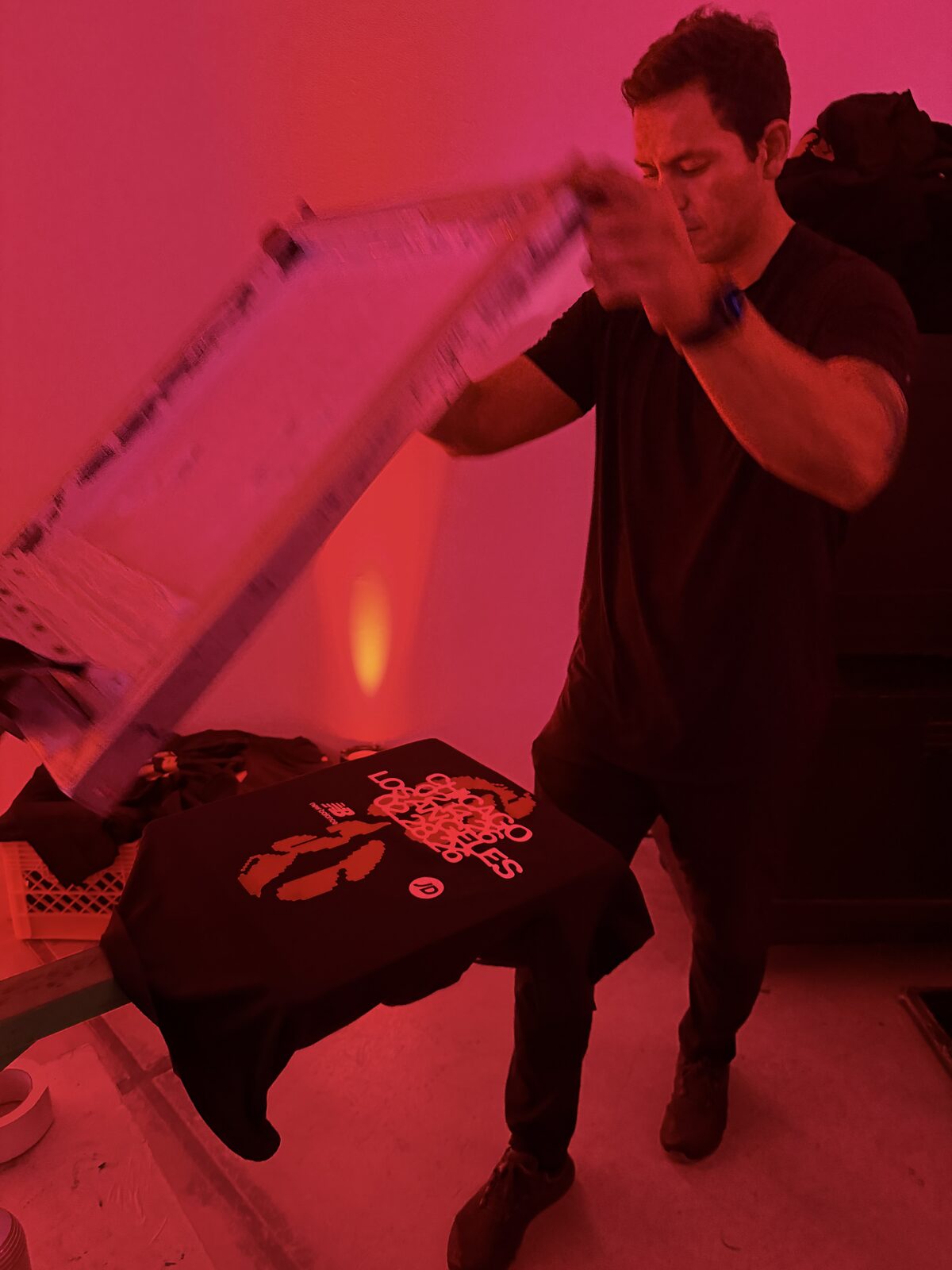
Honesty time. A manual press with a flooded screen and a confident pull is theater — the squeegee stroke is hypnotic in a way a clamshell press isn't. For streetwear-coded audiences, craft markets, and brands whose identity is bold spot-color graphics, we'll recommend live screens ourselves. The tradeoffs: one to two colors realistically, slower and more variable line speed, more setup and cleanup, and artwork locked weeks earlier.
The hybrid nobody tells you about
Plenty of our events run both: a screen station pulling one hero graphic as the spectacle, with a DTF press beside it clearing the volume and the full-color designs. The screen draws the crowd; the DTF line serves it. If your budget only supports one station, our default recommendation for expos, conferences, and corporate events is DTF — throughput and consistency win in rooms where people's time is scheduled.
Decision checklist
- Artwork over two colors, or photographic? → DTF.
- Guest count over 300 in a short window? → DTF (see throughput math).
- Mixed garments on the menu? → DTF (see compatibility).
- The print process IS the entertainment, art is 1–2 colors? → Screens, happily.
Still split? Send both the artwork and the guest count to a producer — we'll tell you which method we'd book for our own party.